
Date:

DNA points to elites living on artificial islands called crannogs

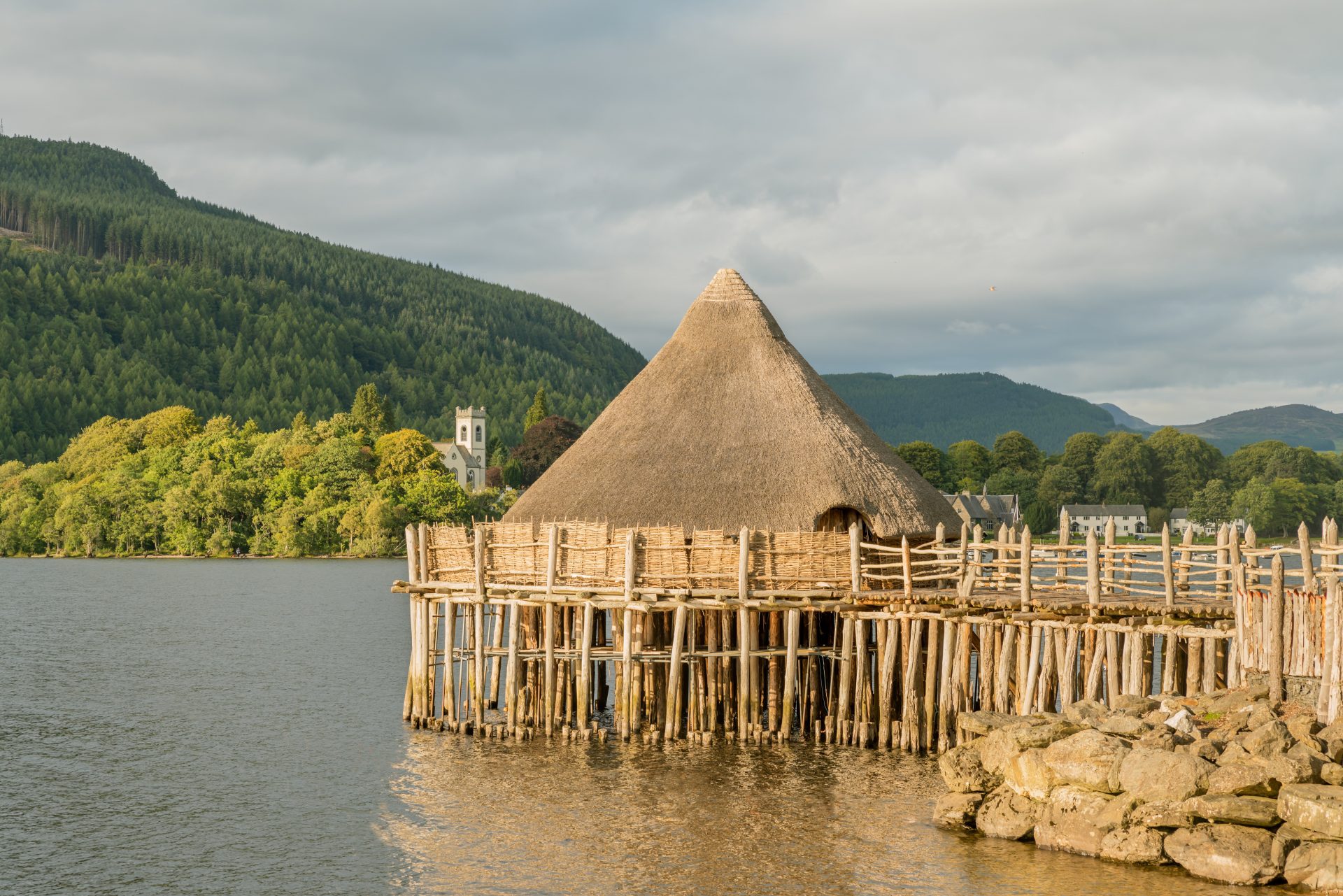
Researchers have recovered DNA from the sediments surrounding crannogs, ancient artificial islands.

Crannogs were built and occupied from the Neolithic, 4000-2200 BC, through to the 16th century AD. They are typically described as a partially or entirely artificial island, usually constructed in lakes and estuarine waters. Hundreds have been found across Scotland, Ireland, and Northern Ireland; however, the aquatic location of crannogs makes them difficult for archaeologists to excavate.

- Advertisement -

Professor Antony Brown from UiT Arctic University of Norway, and an interdisciplinary team from across the UK took samples from lake sediments at crannog sites. The team found ancient DNA known as ‘sedaDNA’, along with environmental and biochemical data, suggesting that the structures were once used by elites according to a paper published in the journal Antiquity.

The team analysed sediment cores from around crannogs in White Loch of Myrton, Scotland, and Lough Yoan, Ireland. Radiocarbon dating of the cores suggests that the crannog in White Loch was built in the Iron Age around 400 BC, while Lough Yoan’s dates to the medieval period, and that both sites were abandoned and re-occupied multiple times.

The integrated analysis showed that the crannogs were important places used as high-status homes which were stocked with ample resources. The team also found pollen from braken for bedding, as well as signs that crafting took place on the islands.

At one of the Lough Yoan crannogs, bone fragments indicate that butchering took place in high quantities, most likely for feasts and entertaining. This supports previous research that suggests crannogs were compounds used by the elite, perhaps for ceremonial occasions.

- Advertisement -

The team also found that the cost of supplying the crannogs with these resources meant that they were linked to dramatic changes in the local area. Changes in pollen and plant sedaDNA indicates that crannog construction was associated with deforestation, likely to provide materials and clear farmland. Meanwhile, waste from the inhabitants polluted and effected the lake ecosystems as early as the Iron Age.

As such, this research sheds new light on living on crannogs and also shows how this integrated method of studying sediment cores provides new insights into otherwise hard-to-study waterside sites.


Antiquity

https://doi.org/10.15184/aqy.2022.70

Header Image Credit : Shutterstock (Copyright)

- Advertisement -

Stay Updated: Follow us on iOS, Android, Google News, Facebook, Instagram, Twitter, Threads, TikTok, LinkedIn, and our newsletter

spot_img
Mark Milligan
Mark Milligan
Mark Milligan is a multi-award-winning journalist and the Managing Editor at HeritageDaily. His background is in archaeology and computer science, having written over 8,000 articles across several online publications. Mark is a member of the Association of British Science Writers (ABSW), the World Federation of Science Journalists, and in 2023 was the recipient of the British Citizen Award for Education, the BCA Medal of Honour, and the UK Prime Minister's Points of Light Award.
spot_img
spot_img

Mobile Application

spot_img

Related Articles

Rare Samanid-Era ganch panels with Kufic inscriptions discovered in Bukhara

Archaeologists excavating the Shahristan archaeological site in Bukhara, Uzbekistan, have discovered fragments of an ornate ganch panel bearing Kufic inscriptions dating to the Samanid era.

Stone Age sites identified in Uzbekistan’s Jizzakh region

Archaeologists surveying Uzbekistan’s Jizzakh region have discovered previously unknown Palaeolithic and Neolithic sites alongside a remarkable collection of ancient petroglyphs depicting hunters, animals and a mysterious solar symbol.

Rare Polish army field telephones discovered in forest near Sochaczew

Two remarkably well-preserved Polish military field telephones, believed to date from the September Campaign of 1939, have been discovered during a search for wartime relics near Sochaczew.

Rare Roman sculptures discovered at vast ancient sanctuary in Chartres

Archaeologists excavating one of the largest religious complexes in Roman Gaul have uncovered an unusually rich collection of sculptures and reliefs, alongside new evidence of an elaborate water system that may have played a role in ancient rituals.

Ancient lakeshore reveals humans living alongside Ice Age giants

Archaeologists excavating the remains of an ancient lake in central Chile have uncovered a 12,500-year-old gomphothere skeleton bearing possible signs of human processing, including a fractured skull that researchers believe may have been broken open to access the animal’s brain.

2,000-year-old Iron Age farmstead discovered in Germany

Archaeologists in the German city of Bielefeld have uncovered the remains of a Late Iron Age farmstead dating back more than 2,000 years, revealing traces of a substantial timber house, smaller buildings and possible cooking installations.

Archaeologists find preserved village near Roman fort

Archaeologists excavating the Roman fort of Kapersburg in Germany have uncovered a remarkably well-preserved settlement just centimetres beneath the forest floor, including a temple dedicated to Mars, votive stones and evidence that the site may have remained in use after the Roman frontier collapsed.

Lost Roman city discovered on the Danube frontier in Austria

Archaeologists have uncovered the remains of a previously unknown Roman town in Lower Austria, complete with a planned street network, extensive burial grounds and an amphitheatre capable of holding around 8,000 spectators. Researchers believe the settlement may be the long-lost city of Claudivium.